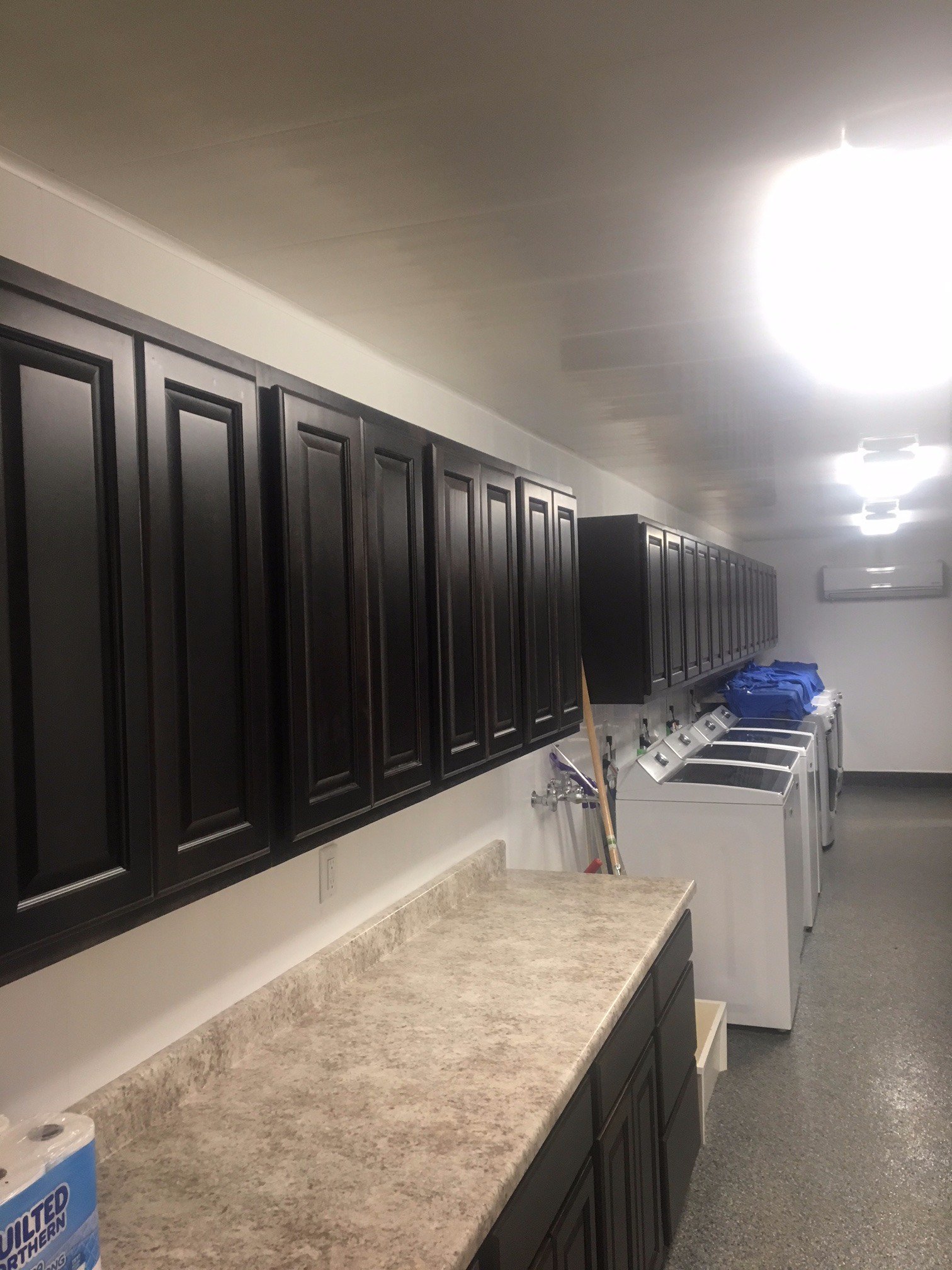
Think of your laundry room as a typical microclimate tucked right inside your residential space. Between hot dryer exhaust, water splashes, and endless steam, walls and ceilings take a daily beating. When moisture seeps behind peeling paint, it actively triggers mold and mildew infestations.
Upgrading your washing appliances may help you conquer laundry day, but transforming walls is what actually helps prevent structural collapse and mold decay. Vinyl lightweight ceiling boards have emerged as a leading solution for moisture-prone areas, such as laundry rooms. Their smooth, tightly sealed surfaces prevent mold growth, leaving no room for structural deterioration.
The Hidden Moisture Problem In Laundry Rooms
Laundry rooms generate a surprising amount of humidity. High-capacity dryers producing heat, sink washdowns, and wet clothes hanging generate moisture in the air.
When airborne water vapor contacts cool wall surfaces, it quickly condenses. Laundry rooms designed with painted drywall allow moisture to reach the underlying wall finish. Persistent dampness levels in laundry rooms significantly lead to:
- Unpleasant musty odors that linger in fabrics and clothes
- Structural swelling, bubbling, and crumbling drywall
- Dark mold patches forming behind machines and ceilings
- Frequent repainting, patching, and costly surface repairs
A Step-by-Step Comparison- Evaluating Wall Materials
Wall finishes should combine moisture resistance with low-maintenance properties to minimize water damage and ensure long-term durability.
Evaluating common wall materials reveals sharp differences in performance when exposed to humidity.
|
Performance Factors |
Vinyl Panels |
FRP Panels |
Drywall |
|
Moisture-Resistance |
100% water-resistant due to their non-porous surfaces. |
Moderate. The presence of wooden backers make FRP vulnerable to moisture. |
Poor. Absorbs moisture, which crumble and sag quickly. |
|
Mold-Resistance |
Excellent. Crevice-free surfaces prevent mold growth. |
Textured surfaces can attract spores over time. |
Low. The plywood supporting the drywall becomes the source for mold growth. |
|
Cleaning and Hygiene |
Smooth surfaces can be wiped clean. No need for extensive scrubbing. |
Requires aggressive scrubbing in textured surfaces. |
Delicate finishes. Sensitive to cleaning. |
|
Installation |
Fast interlocking system. Attach directly to the studs. |
Requires heavy adhesives, fasteners, and OSB backer boards. |
Requires mudding, taping, and sanding along with multiple coats of paint. |
This comparison table clearly shows that vinyl panels outperform traditional wall finishes in cleanliness, maintenance, moisture resistance, and installation. The initial pricing may be high, but minimal upkeep and simple installation reduce the need for additional labor, making them vinyl panels cost-effective option.
How Vinyl Wall Panels Actively Prevent Mold Growth?
Vinyl wall panels are designed to eliminate the conditions mold requires to thrive. Their mold resistance stems from key structural properties, including:
- 100% Non-Porous Composition - Unlike drywall and FRP, vinyl panels offer an impenetrable barrier that prevents moisture absorption. The non-porous finish of vinyl panels ensures that moisture does not get trapped behind the walls, leaving no chance for mold to thrive.
- Prevent Build-Up of Organic Food - Mold spores require organic material, such as plywood or OSB backer boards, to grow. Vinyl panels do not require wooden backers for support, eliminating the risk of mold infestations.
- Seamless Interlocking Joints - High-quality vinyl panels feature a tongue-and-groove interlocking mechanism that creates a tight, water-resistant barrier. This prevents condensation from leaking into the wall cavity where mold usually grows.
- Easy to Clean Surfaces - Vinyl ceiling wall panels have a smooth, texture-free finish that does not trap dirt, soap scums, and spores. Just a simple wipe-down and pressure wash are enough to maintain the vinyl panels’ bright, pristine appearance.
What to Look for When Choosing Vinyl Panels for Laundry Rooms?
Choosing vinyl wall panels requires looking beyond the panel itself. The entire assembly must stay completely watertight. Seams, corners, fasteners, and trim are common weak points where moisture sneaks in. Before purchasing, review the manufacturer's installation requirements to ensure the wall system remains properly sealed and intact in high-humidity conditions. Besides, look for a warranty period that helps you protect your valuable investment.
Frequently Asked Questions
Can mold grow behind vinyl wall panels?
When properly installed with tight interlocking seams, vinyl panels form an impenetrable moisture barrier that prevents water from reaching the wall cavity. This effectively blocks the growth of hidden mold behind the panels.
How do you clean vinyl wall panels in a laundry room?
Cleaning requires minimal effort. Wipe the panels down with a damp cloth or pressure-wash them with a hose pipe.
Are vinyl panels better than tile for laundry room walls?
Yes. Although tile is water-resistant, installation depends on porous grout lines that regularly absorb moisture, discolor, and harbor mold. Vinyl panels eliminate grout, offering a seamless, hygienic surface.
Explore Duramax Vinyl Panels for Laundry Room Upgrade
Duramax is a leading provider of vinyl water-resistant paneling across North America. They are FDA-compliant and come with a limited lifetime warranty. Duramax vinyl panels are ½-inch thick and 16 inches wide and can be customized in 8, 10, 12, 14, 16, and 20 ft lengths. Book your project consultation with our experts today. Request a free sample.