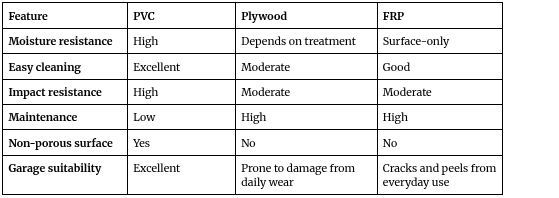
PVC is the most practical drywall alternative for garage walls when moisture resistance, easy cleaning, and low maintenance are priorities. Plywood offers good impact resistance and mounting strength, while FRP provides a durable, washable surface. The right choice depends on how you use the garage, how much moisture it encounters, and whether wall protection or heavy-duty mounting is the main concern. For most residential garages, workshops, and utility areas where moisture and routine maintenance matter, PVC wall panels offer a strong combination of durability, cleanability, and moisture resistance.
Why Look Beyond Drywall?
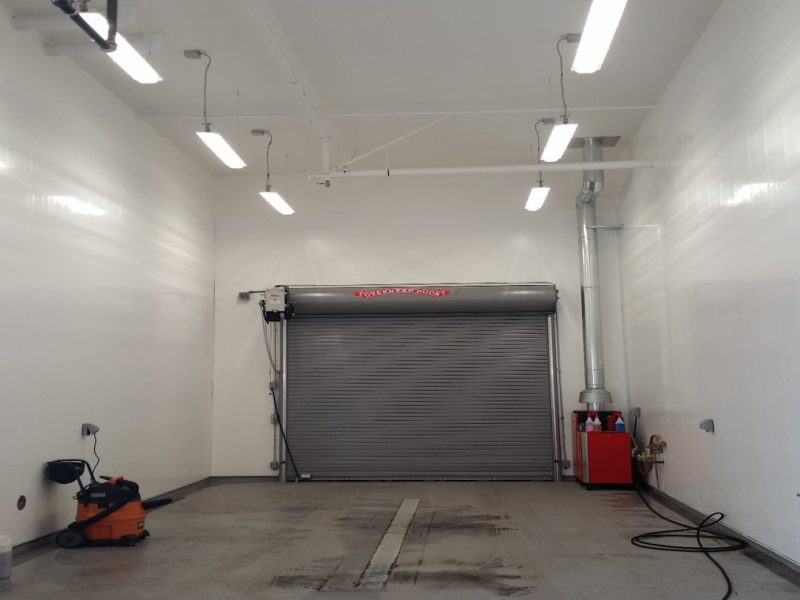
Drywall works well in many finished interiors, but garages expose wall materials to conditions less common indoors. Cars bring in rain and snow, floors may be washed, and walls can encounter oil, dirt, tools, equipment, and accidental impacts. Repeated moisture exposure can damage conventional drywall. You may also need repairs for dented or stained walls. An alternative to drywall in a garage can provide moisture resistance, impact durability, and easier cleaning, installation, and maintenance.
PVC Wall Panels for Garage Walls
PVC panels provide a smooth, non-porous surface that does not readily absorb moisture. This makes them useful in garages where humidity, water splashes, and routine cleaning are concerns. Made from 100% virgin vinyl and featuring a tongue-and-groove connection, they can be installed directly on walls or existing surfaces. Their smooth surface also makes routine cleaning easier. PVC is also useful when the garage doubles as a workshop, storage area, laundry space, or utility room.
Is Plywood a Good Garage Wall Alternative?
Plywood is a common choice when homeowners want a wall surface that can support shelves, cabinets, hooks, and other mounted equipment. It can also handle impacts better than standard drywall.
The drawback is moisture. Untreated or improperly protected plywood can absorb water and may eventually swell, warp, or deteriorate. Painting or sealing can improve its resistance, but that adds another maintenance requirement.
What About FRP Panels?
Fiberglass-reinforced plastic, or FRP, is designed for commercial wall applications. But they come with a drawback, as FRP installations often require appropriate substrates, adhesives, or mechanical fastening systems depending on the application. The finished system also needs properly treated seams and penetrations to manage moisture. If moisture seeps through the joints or trims and reaches the wooden backer, it could rot and mold.
PVC can be a simpler option when the project prioritizes moisture resistance and low maintenance.
PVC vs. Plywood vs. FRP
Which Garage Wall Alternative Should You Choose?
Choose PVC when moisture resistance, cleanability, and low maintenance are priorities. Its inner webbed truss design provides a sturdy surface for mounting heavy storage systems, and its smooth, washable surface makes cleaning easy. In addition, PVC panels also have a class 1 fire rating to ensure safety through limited flame spread and smoke production.
Whatever material you choose, address leaks, condensation, and drainage problems before installing wall panels, because a wall covering can't fix an underlying moisture issue.
Upgrade Your Garage Walls With Duramax PVC Panels
If you want an alternative to drywall in garage that can handle everyday moisture, dirt, and cleaning, Duramax PVC wall panels are a practical option. Their non-porous construction, 100% virgin vinyl, and tongue-and-groove design provide durable wall protection with straightforward maintenance. Request a free Duramax sample and quote to see if PVC panels are the right drywall alternative for your garage.