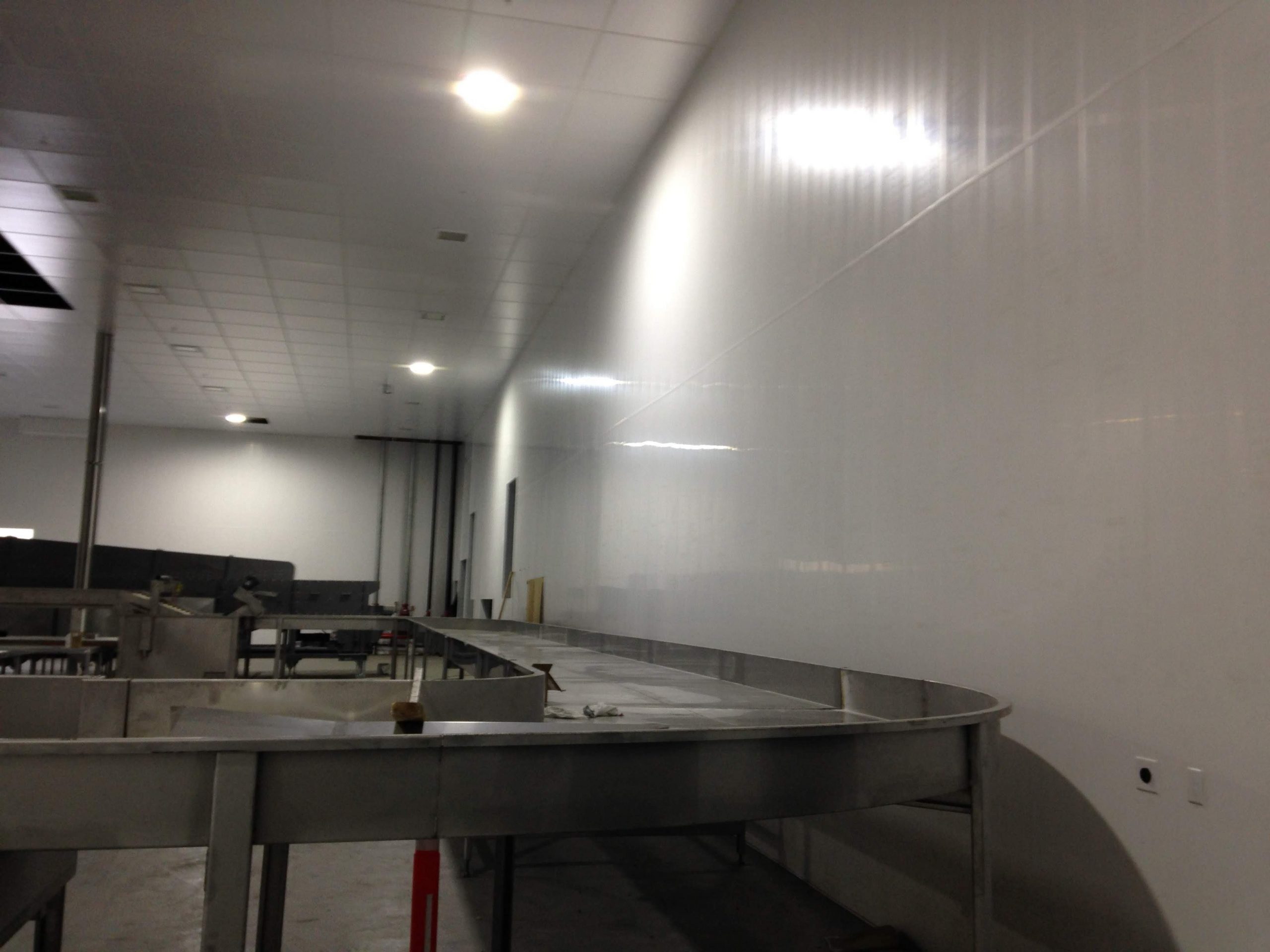
Choose food-processing wall panels based on hygiene, cleanability, moisture and chemical resistance, durability, and compliance with your facility's requirements. The right panel should be able to handle repeated washdowns without becoming a maintenance problem. It also needs to withstand exposure to equipment, cleaning chemicals, temperature fluctuations, and the general wear and tear of food production.
In my experience, wall panels are often treated as a finishing decision. That's a mistake. In a food processing facility, the walls are part of the sanitation environment. If a material absorbs moisture, develops damaged seams, or takes too much effort to clean, it is a complete no. Here’s what you should look for?
Start With Cleanability
Food processing walls need regular cleaning. Depending on the operation, that can mean daily washdowns and frequent sanitization. The ideal panel should have a smooth, non-porous surface that doesn't readily absorb water or provide unnecessary places for residue to collect. This makes it easier for maintenance teams to wipe, wash, and sanitize the walls.
PVC panels are well-suited to this requirement, as they have a smooth, moisture-resistant surface designed for easy cleaning and maintenance. A standard wipe-down or pressure wash is all it takes.
Consider Moisture Exposure
Water is unavoidable in many food processing environments. Processing rooms, preparation areas, washdown zones, and commercial kitchens can all experience significant moisture. Traditional drywall can become vulnerable when repeatedly exposed to water, particularly around seams and damaged areas.
But PVC is different, as it doesn’t readily absorb moisture and doesn't rot or rust. That makes it a practical option for areas where walls are routinely washed.
Look at Chemical Resistance
Water isn't the only thing hitting food processing walls. Cleaning crews may use detergents, sanitizers, and other chemicals as part of their sanitation procedures. Your wall panel needs to be compatible with the cleaning products used at your facility.
PVC panels are designed to resist chemicals, bacteria, mold, moisture, scratches, rust, corrosion, and delamination.
Don't Ignore Impact and Durability
Food processing facilities are busy places with carts moving through production areas and equipment getting repositioned. Hoses and tools can occasionally hit the walls as well. A fragile surface won't stay in good condition for long.
PVC panels are ½-inch thick and engineered with a webbed inner design intended to provide strength and rigidity. They are impact-resistant and useful in areas where walls are subject to regular day-to-day impacts.
Check Installation Requirements
Installation can have a surprisingly large effect on project cost and downtime. PVC panels feature a tongue-and-groove interlocking system and can be installed directly onto walls or ceilings using studs and fasteners. That reduces preparation time and simplifies installation compared with systems that require extensive substrate work.
What About Compliance?
Food processing facilities have specific hygiene and safety requirements that you must always verify before selecting a wall system. PVC food-grade wall panels are CFIA and FDA-compliant and meet USDA requirements, making them applicable for commercial kitchen and food-preparation environments.
Protect Your Food Processing Facility With FDA-Compliant Duramax PVC Panels
When selecting food-processing wall panels, don’t just look for the cheapest option to install. Rather, opt for the one that continues to perform for decades even with stringent washdown protocols. PVC ticks all the boxes as the most trustworthy choice for food processing facilities. Explore the ASTM-certified and FDA-compliant PVC panels from Duramax, available at factory-direct prices and backed by a limited lifetime warranty. Request a free sample now!