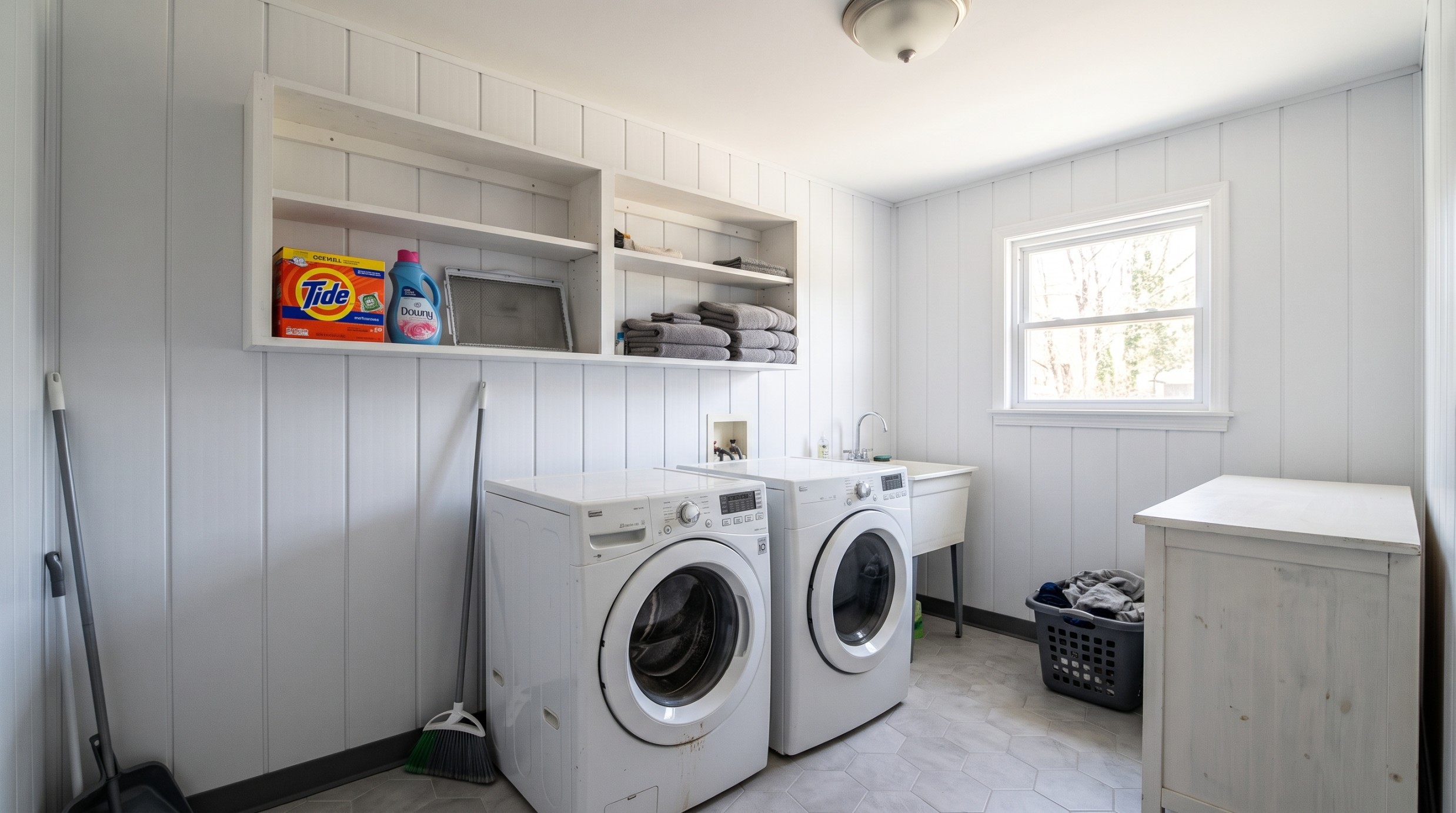
Peeling walls, damp patches, and mold buildup are common issues in laundry spaces. The walls constantly deal with conditions that can be hard on ordinary wall finishes. Washing machines release heat and moisture, plumbing connections can leak, and cleaning happens often. In commercial laundry facilities, these conditions become more demanding because equipment runs for long hours. Let’s find out which of PVC and drywall can be the better solution for laundry room wall panels:
Moisture Resistance: PVC Has an Advantage
Moisture is one of the main concerns in a laundry room. Drywall can deteriorate when water reaches its paper-facing or damaged areas. Repeated exposure may lead to stains, soft spots, peeling finishes, or repairs.
PVC panels have a non-porous surface that does not absorb water like traditional drywall. This makes them suitable for walls near washing machines, utility sinks, floor drains, and other moisture-prone areas. With proper sealing around joints, corners, fixtures, and penetrations, you can expect long-lasting performance with PVC paneling for laundry rooms.
Cleaning: PVC Requires Less Wall Maintenance
Laundry rooms need regular cleaning since detergent residue, lint, dust, and water can settle on nearby walls. Traditional drywall requires care during cleaning because aggressive scrubbing can damage the finish. But PVC panels’ smooth surface can be wiped or pressure washed as part of routine maintenance, reducing the need for repeated painting and touch-ups.
Durability: PVC Handles Routine Wear
Laundry rooms also face heavy traffic from staff moving carts, baskets, supplies, and equipment through the space. As a result, walls can receive accidental knocks during normal operations. Drywall can dent or crack after impact and may need patching, while PVC wall panels provide a more durable surface for areas exposed to routine commercial activity. Made from 100% virgin vinyl and designed with a unique inner webbed truss design, PVC panels are durable and resist impacts and daily wear.
Installation: PVC Can Reduce Finishing Steps
Drywall installation involves hanging boards, treating joints, sanding, priming, and painting. Each stage adds labor and requires drying time. The lightweight PVC panels use tongue-and-groove interlocking for faster installation. They are ½” thick and can be attached directly to the walls without additional backer boards.
PVC or Drywall: Which Should You Choose?
For a dry residential laundry room with limited water exposure, drywall may still be an option, but it requires more maintenance and more frequent repairs. But for commercial laundry rooms or spaces with frequent moisture and cleaning, PVC panels are ideal.
Duramax PVC Panels Are An Affordable Alternative To Drywall
PVC panels are a practical, affordable alternative to drywall for laundry rooms, especially where moisture, frequent cleaning, and daily wear are part of normal operations. Check out Duramax PVC laundry room wall panels, which provide a non-porous, durable surface with tongue-and-groove installation for demanding commercial interiors. If you are upgrading a laundry facility, request a free Duramax sample or order at factory-direct pricing. Duramax panels ship nationwide and come with a limited lifetime warranty.