Maintaining strict sanitary standards in dairy facilities, such as milking parlors, milk processing rooms, cheese aging areas, and bottling lines, is an ongoing operational battle. Dairy environments combine high humidity, organic fat splatters, lactic acid exposure, and rigorous daily high-pressure washdowns that deteriorate traditional walls prematurely. This creates hidden breeding grounds for pathogenic bacteria like Listeria monocytogenes, E. coli, and Salmonella.
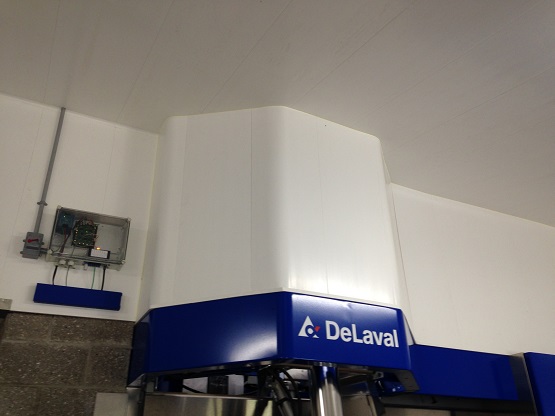
For decades, Fiber-Reinforced Plastics were the standard choice for agricultural wall cladding. However, as FDA and USDA mandates tighten food safety regulations, facility managers are replacing FRP with vinyl dairy wall panels. While both materials look functional on the surface, their core structural designs show why vinyl panels provide far superior long-term hygiene and food-safety protection.
1. Direct-to-Stud Mounting vs. Organic Backer Board Risk
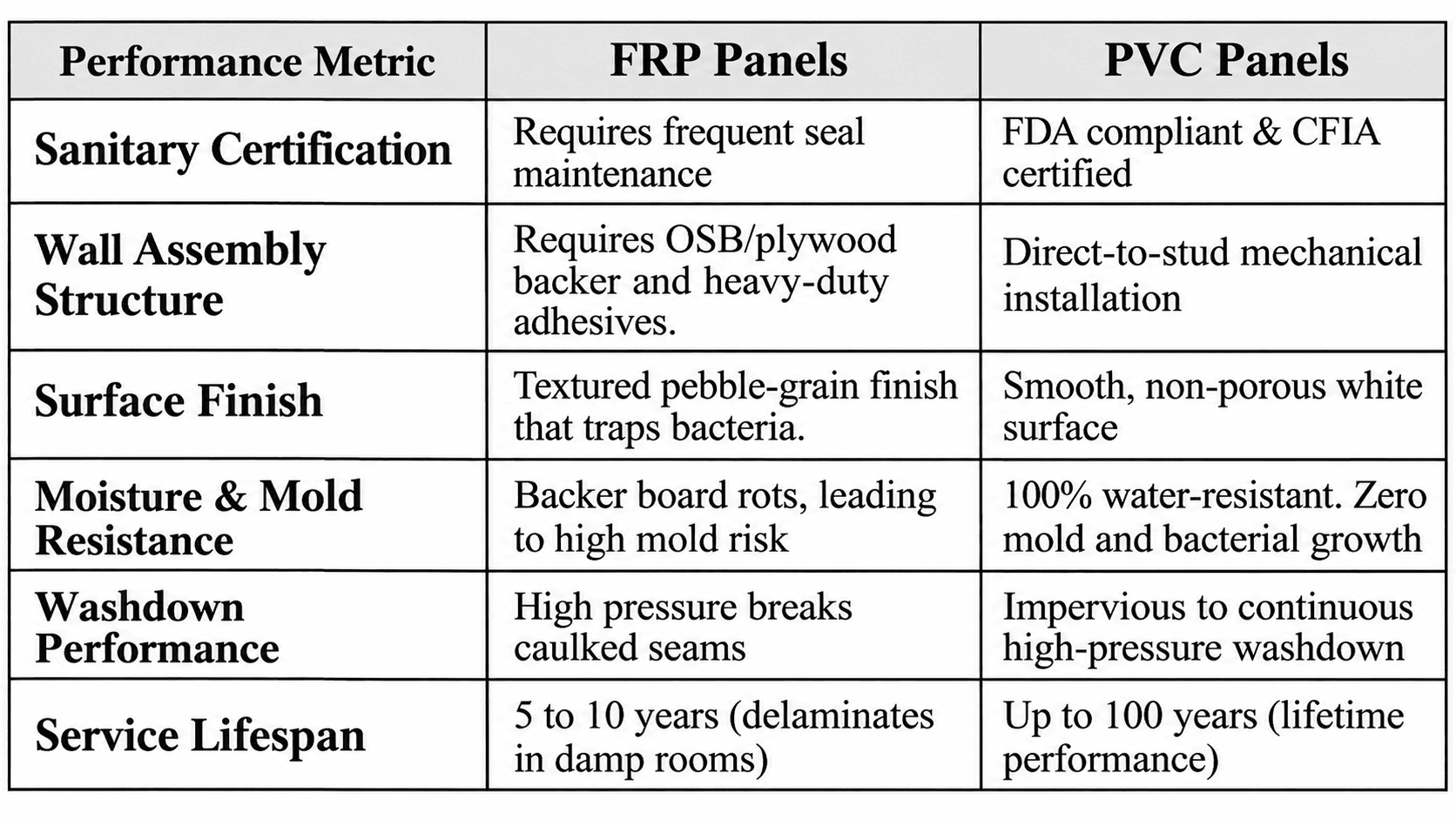
The key hygienic difference between vinyl wall panels and FRP sheets is how each system attaches to the building frame. FRP cannot be mounted directly onto wall studs. Installing FRP requires gluing the sheets to an Oriented Strand Board (OSB) or plywood backer board using taping and adhesives. In high-humidity dairy environments, water vapor seeps past joint trim or unsealed rivet holes, saturating the wooden backer board behind the panel. This leads to hidden wood rot, structural wall failure, and rampant mold colonies trapped behind the wall face.
Engineered 1/2-inch-thick virgin PVC panels feature an internal webbed truss core that provides unmatched structural robustness. They screw directly into open wall studs or ceiling framing, eliminating the need for wooden OSB/plywood backer boards or liquid glues. With no organic wood components in the wall assembly, nothing behind the panels can trap moisture or support bacterial growth.
2. Smooth Virgin Vinyl vs. Textured Glass Fiber Composite
Surface texture and material composition determine how easily a wall can be cleaned and disinfected during daily sanitation routines. Dairy FRP panels are manufactured by embedding glass fibers into a polyester resin matrix. Most FRP panels feature a heavily embossed "pebble-grain" surface designed to hide scuffs. Unfortunately, these textured bumps trap milk fat, moisture, and dirt. Hot chemical washdowns gradually wear down the gel coat over time, exposing raw glass fibers. These exposed fibers create microscopic surface fractures where bacteria thrive and resist routine pressure washing.
High-grade PVC wall panels are made of pure virgin vinyl with zero glass fibers or organic fillers. The surface is non-porous and ultra-smooth. Milk splatters, grease, and biological residues cannot penetrate the dense vinyl layer, allowing water and sanitizing agents to wash away contaminants cleanly without scrubbing.
3. Interlocking Edges vs. Dirt-Trapping Moldings
A hygienic wall system must maintain an airtight, watertight barrier across its entire surface area, especially at panel-to-panel joints. FRP panels are installed using exposed rivets, and bead silicone caulking. Over time, continuous temperature swings cause FRP panels to expand and contract significantly. This thermal movement pops plastic rivets, breaks the silicone seal, and opens joint gaps. Moisture, airborne dirt, and organic milk residues get forced into these compromised seams, harboring deep-seated bacterial growth.
Commercial-grade PVC panels feature tongue-and-groove interlocking sides. Panels interlock mechanically to create a smooth surface with fully concealed fasteners. Water droplets, washdown spray, and airborne dust slide over the interlocking joint without penetrating the underlying wall cavity.
4. Sanitation Chemical Resistance and Washdown Durability
Dairy processing rooms require continuous sanitization using harsh alkaline detergents, chlorine solutions, hot water, and high-pressure sprayers.
How to Verify Regulatory Hygiene and Fire-Safety Requirements?
Before installing commercial wall cladding, verify that panels carry an ASTM E84 Class A rating to guarantee low flame spread and minimal smoke development. Additionally, confirm compliance with FDA, USDA, and CFIA regulations. High-performance virgin PVC panels meet these strict standards with non-porous, chemical-resistant surfaces that withstand high-pressure washdowns, prevent bacterial growth, and satisfy local building codes.
FAQs
Why do PVC panels support better sanitation in dairy farms than FRP?
FRP panels rely on wooden backer boards and liquid adhesives that rot and harbor mold when exposed to high moisture. PVC panels mount directly to wall studs without backer boards, providing a 100% non-porous and backer-free wall system that eliminates hidden bacterial growth.
Are vinyl panels compliant with USDA and FDA food safety standards?
Yes. High-grade PVC panels feature a smooth, non-porous, chemical-resistant surface that fulfills strict USDA, FDA, and CFIA sanitary regulations for food processing, milk handling, and commercial agricultural facilities.
Can high-pressure hot water washdowns damage vinyl panels?
No. Vinyl panels feature durable interlocking tongue-and-groove joints that form a tight barrier against water penetration. Unlike FRP seams that require fragile silicone caulk and plastic trims, vinyl panels withstand repeated high-pressure hot water washdowns and harsh chemical sanitizers without peeling, yellowing, or warping.
Switch to Duramax Vinyl Panels for Ultimate Dairy Facility Protection
Duramax brings you dairy wall panels made of 100% virgin vinyl formulation. They are lightweight wall materials that meet FDA and CFIA standards. Duramax Dairy Vinyl Panels are ½ inch thick and 16-inches wide and can be customized in 8,10,12,14,16, and 20 ft lengths. We dispatch factory-direct PVC panels to your destination within two weeks. Place your order now.