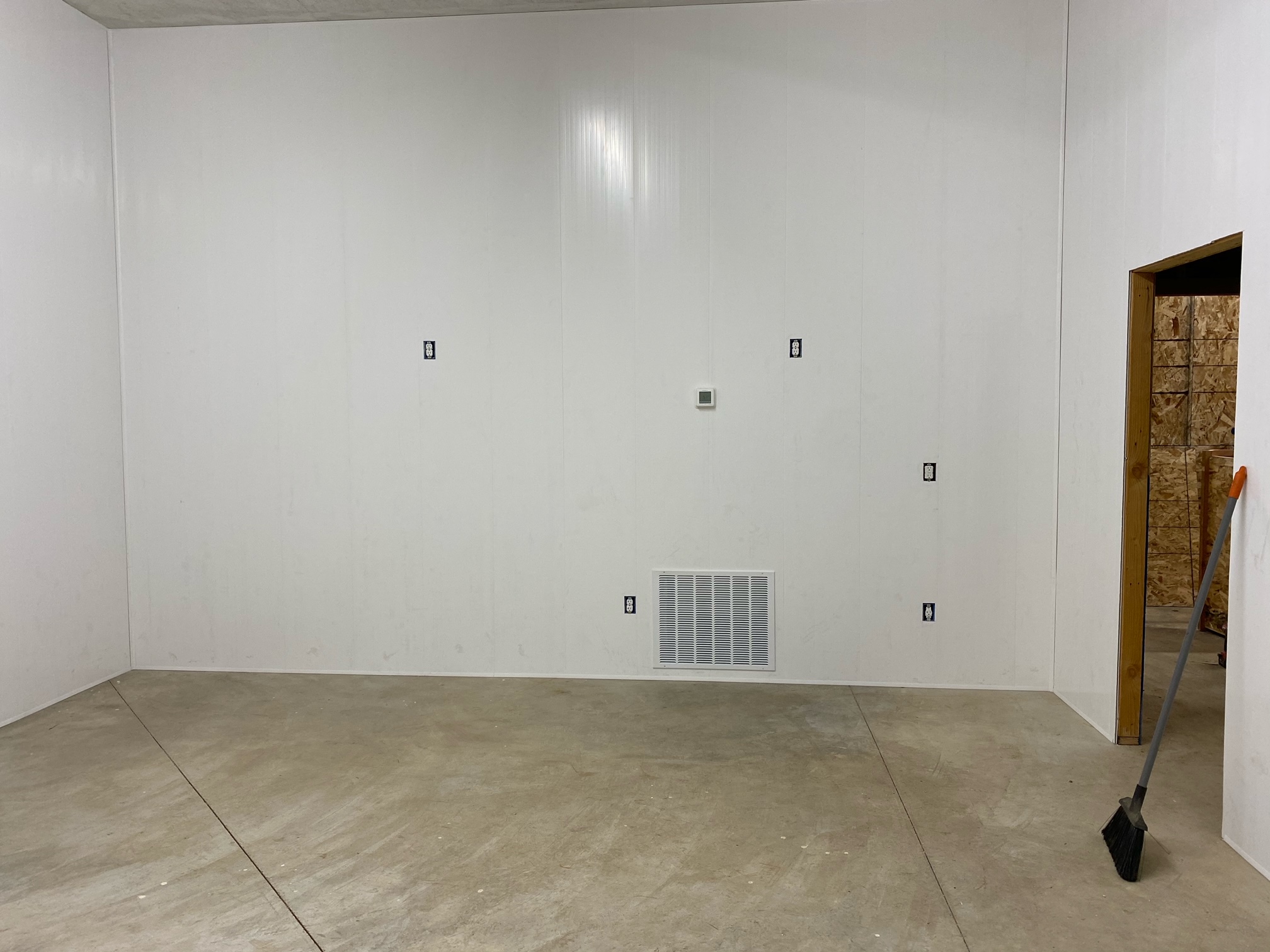
Vinyl covered drywall works satisfactorily in offices, bedrooms, and climate-controlled dry interiors, but struggles in high-moisture commercial environments. If you're designing a commercial kitchen, food processing facility, grow room, or dairy operation, constant humidity and frequent washdowns quickly compromise gypsum. This is why most builders are switching to interlocking PVC panels because they require less maintenance and hold up much better over time.
Let's compare drywall and PVC wall panels based on installation, durability, moisture resistance, maintenance, and long-term cost.
Where Traditional Drywall Fails in Commercial & High-Moisture Settings
Drywall performs passably in climate-controlled interiors. Once moisture, humidity, or heavy daily use becomes part of the equation, it has limitations. Here’s where they
Absorbs Moisture
Drywall has a gypsum core covered with paper. Although moisture-resistant versions are available, they're not completely waterproof. When exposed to high humidity or repeated washdowns, drywall can eventually:
- swell
- soften
- stain
- deteriorate
Mold Can Become a Problem
Vinyl drywall is paper-faced and contains organic material that can support mold growth if moisture gets behind the surface. Unchecked leaks, condensation, or poor ventilation can create conditions where mold develops inside the wall before the damage is even visible.
Installation Takes Time
Installing drywall is a multi-step process that adds labor, extends the project timeline, and creates dust that must be cleaned before the space is ready for use. The installation typically involves
- hanging the sheets
- taping joints
- applying joint compound
- sanding
- priming
- painting
Why Commercial Facilities Are Switching to Interlocking PVC Panels?
High-quality, ASTM-certified PVC panels are engineered to withstand the very environments that destroy drywall. They do not rely on special paints or exterior sealants that can wear out. Instead, the use of 100% virgin vinyl and the unique inner webbed truss design makes them structurally sturdy and impact-resistant.
- 100% Moisture and Vapor Proofing
Featuring a non-porous and seamless surface, PVC panels are completely moisture-resistant. They won’t absorb moisture, swell, or rot no matter how much higher the relative humidity spikes. They are the ideal fit for environments with high humidity or that require frequent washdowns.
- Built-In Mold and Fire Resistance
Engineered from 100% virgin vinyl, PVC panels meet USDA and FDA compliance guidelines for cleanability and carry an ASTM E84 Class A fire rating. Their non-porous surface eliminates organic material, preventing mold spores from taking root.
- Engineered for everyday impacts
The internal webbed truss core distributes point impacts, resisting surface dents and punctures from utility carts or equipment better than standard gypsum.
The Lifetime ROI: A 10 Year Cost Timeline
Looking at the initial material cost alone, drywall is a cheaper option per square foot. But when you factor in skilled labor hours, ongoing maintenance, and operational downtime, the long-term expenses make them impractical. Here’s a 10-year cost timeline to understand how PVC panels are an affordable drywall alternative in the long run.
Year 0: Upfront Installation Expenses
The material price tag of drywall is cheaper than PVC, but with multi-day installation including labor, mudding, taping, and painting, the expenses narrow between the two. PVC panels reduce typical wall installation from a 4-step process to a 1-step process, saving labor costs.
Years 1 to 3: Environmental Stressors
PVC panels remain unaffected in environments exposed to heavy humidity, chemical washdown, and automated sprayers. Drywall in similar settings starts showing cracks, moisture stains, and peeling paint.
Years 5 to 7: Operational Breakdown
Drywall users often complain about structural sagging and mold growth behind the panels, resulting in downtime for messy remediation. PVC panels, on the other hand, continue to perform effectively with minimal upkeep and a simple wipe-down.
Year 10+ : Lifetime Value
After ten years of installation, drywall has either been patched, repainted, or entirely replaced at least once. PVC panels remain structurally flawless, highly reflective, and clean, offering maximum ROI.
Frequently Asked Questions on PVC Panels Vs Drywall
Is PVC wall paneling actually cheaper than drywall?
Yes. If you are considering raw materials, the upfront cost of drywall is lower. But with professional mudding, taping, and painting, the total installation costs escalate dramatically. PVC panels are installed directly into existing surfaces using studs and fasteners, saving on material and labor costs. Over the lifetime of your facility, PVC panels win the financial game with minimal upkeep and repair needs.
Can you install PVC interlocking panels over existing drywall?
You absolutely can install PVC over existing drywall or any surface as long as the underlying surface remains structurally sound.
Do PVC wall panels meet strict commercial building codes?
PVC panels are Class 1 fire-resistant and meet USDA standards. They also adhere to stringent hygiene requirements and are CFIA- and FDA-compliant.
Do PVC wall panels scratch or dent easily?
No, they don’t. Drywall punctures because of its brittle core, but PVC panels have a hollow, truss framework that absorbs impacts and does not scratch, dent, crack, or peel from everyday wear and tear.
Upgrade Your Interior For Long-Term Performance
Looking for a wall material for environments where moisture, hygiene, and durability are everyday concerns? Look beyond drywall and choose a material that requires less maintenance and can deliver better long-term value. Duramax offers a smarter, lightweight drywall alternative with ASTM-certified, FDA-compliant, and highly reflective interlocking PVC wall panels. Engineered to cut installation labor in half, these panels provide a tough, waterproof structural envelope, backed by a limited lifetime warranty, and are built to last for decades. Request a free sample now!